Introduction:
Have you ever wondered what it’s like to build investor trust from the ground up in one of the world’s fastest-changing markets?
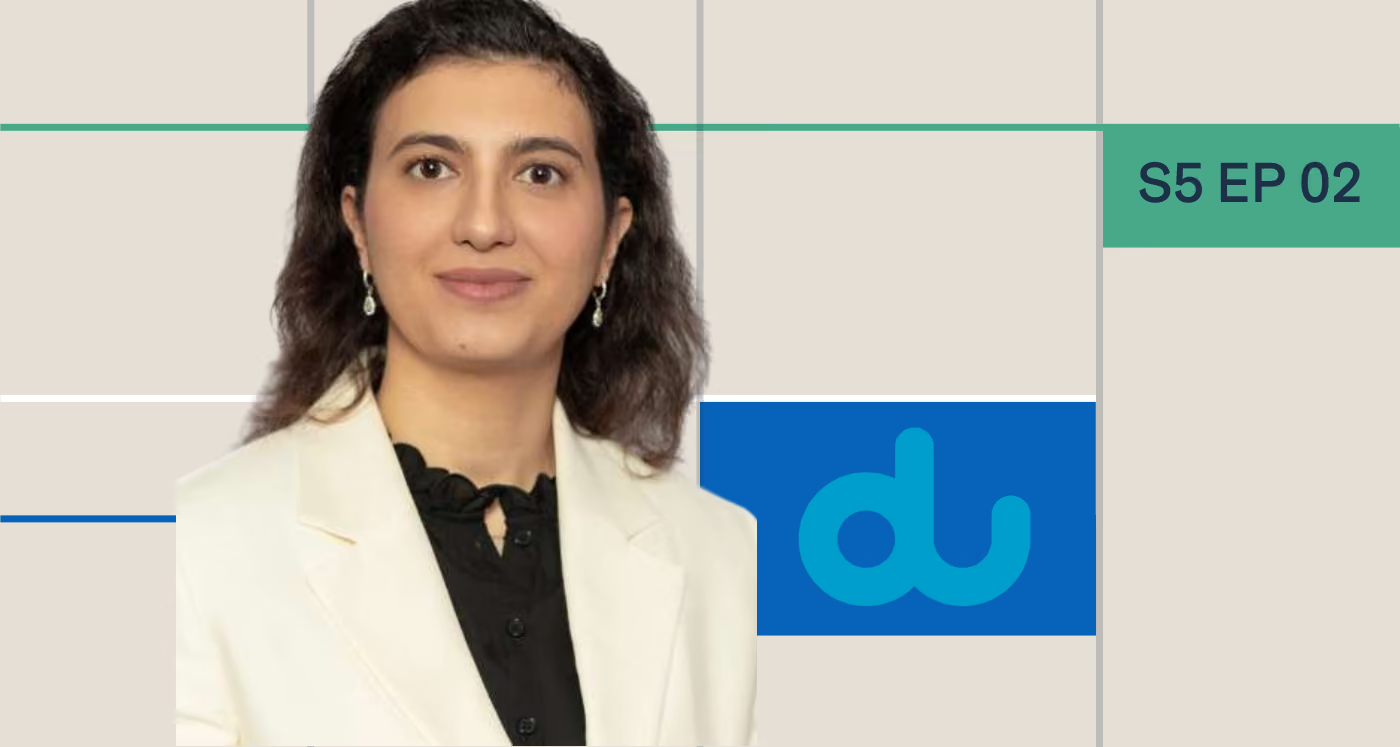
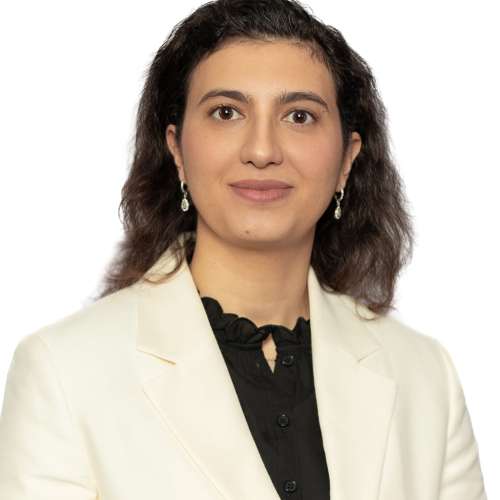
Today’s guest, Salwa Gradl, knows that challenge firsthand. As Head of Investor Relations at du, one of the UAE’s leading telecom companies, Salwa stepped into a region where IPOs are emerging almost every week, national ambitions are high, and the pace of change leaves no room for standing still.
Lean IR teams, relentless expectations, and the pressure to deliver transparency and credibility in a market that’s still finding its voice on the global stage. Those are the unique realities of Investor Relations in the Middle East right now. And it’s what makes the industry so exciting at the moment.
Salwa shares how to attract global capital when resources are tight, how to turn national strategies like UAE Vision 2031 into a compelling investor narrative, and why, in a region where everything is evolving fast, the IR function is more than just a reporting line — it’s a strategic engine for growth.
Let’s get into it.
___________________________________________________________
Current State and Dynamics of the Market
[00:00:00] Mark: I want to start off with a question, understanding the current state of investor relations in the Middle East. You work in one of capital markets' fastest-growing regions. How would you describe the current state of investor relations in the Middle East?
[00:00:15] Salwa: Thanks, Mark. That's a great question to start.
[00:00:18] Salwa: I think the region is experiencing a remarkable moment in its capital markets right now. We've seen multiple IPOs across the region. I've been here for two years. On your screens every week, some new IPOs. And more recently, we have completed at du, a first-of-its-kind, secondary offering.
[00:00:36] Salwa: And it was a significant milestone for the company, but also for the market as a whole. Transactions like this are really important because they don't just serve one stakeholder. They benefit everyone. From selling shareholders, new investors, the market infrastructure, and the wider economy.
[00:00:53] Salwa: We have been able to increase our free float and our liquidity. We have broadened our share base, and with that comes a stronger demand for transparency, governance, and disclosure.
[00:01:04] Salwa: I find what is exciting right now is that companies in the region have truly stepped up to meet these expectations. The IR teams today are operating in a much more dynamic environment. The bar is constantly being raised, and I'm witnessing this every day in my environment — among my colleagues and my IR colleagues in other companies. And I feel there is this amazing momentum. It's driven by the dynamism of the market. As I was explaining, all these IPOs, SPOs. But also, the region is very attractive for top talent from all backgrounds, financial professionals or specialists in IR. And this influx of talent, coupled with the ambitious national strategies, are creating this virtuous circle where you see stronger markets attract stronger talent and in turn, it strengthens the markets even further.
[00:01:57] Salwa: One thing I wanted to mention also that is specific to IR in the region is that we have — I mean, it's not specific, actually, because in each region, you have an association — but I feel here is something that I was lacking as an IR professional in Europe. There's this Middle East Investor Relations Association, that’s been very important in building professional standards for the IR community here. They have training programs, knowledge sharing, they have an annual conference, and they have created this platform for IR professionals to connect with each other, to share global best practices.
[00:02:33] Salwa: I feel this ecosystem is critical, specifically in this type of region where everything is evolving very fast. We have been seeing that IR professionals have not been only reacting to market development, but they have been shaping them. And that's been very interesting in the past years.
[00:02:49] Salwa: From my perspective, I think one of the most positive developments is the growing awareness of IR's importance at the top level of the company. So, especially the company where I work in, where you see boards, and executive teams recognizing that the IR function is not just about reporting numbers.
[00:03:07] Salwa: It's about telling a story and engaging with stakeholders and positioning the business for long-term growth. So that recognition is relatively new, but it's growing, and I think it's going to continue in this direction with everything that we are seeing with the higher share of international investors and the broader share base and the higher free float.
[00:03:30] Salwa: I think that the current state is that it's very ambitious. Currently, I feel that it's growing and it's evolving faster than where I come from in Europe, where we are already in a state of, let's say, maturity. And companies are embracing higher standards of governance, higher standards of disclosure, and investors are also more engaged, and IR professionals have the opportunity to play a very strategic role in shaping how their organizations are perceived both regionally and globally.
[00:03:59] Salwa: And honestly, it's a very nice time to be in IR in this part of the world.
[00:04:06] Mark: That's great. And the way that I would really describe it as well, and we've spent a fair amount of time speaking with investor relations teams in the Middle East, and we've spent a lot of time with you in particular.
[00:04:15] Mark: And the best way I would describe it — it's very vibrant, to your point. There's a lot of IPOs, there's a lot of desire for growth and improvement in learning, which has been really great to see. But as you've said, it's very different from the level of maturity that you would see in Europe or North America, where there's just these longstanding investor relations teams and best practices.
[00:04:38] Mark: From your perspective, what does good IR look like in the context of this region, and how might that differ from other parts of the world?
[00:04:49] Salwa: With everything we said, I don't think that good IR really changes if you are here or in Europe. I think that the standards should be the same, because good investor relations means that you understand the fair value of your company, and you are working to close the gap between this fair value and the market value. And you do that by telling the story in the right way to the right audience at the right time, in a nutshell. But it should be the aim of any IR.
[00:05:25] Salwa: So, it's being transparent, being consistent in disclosures, building strong engagement, and ensuring the liquidity of the stock, and maintaining the right balance of investor type. These challenges, they're probably different from one region to the other, but it's in the end, what we aim to do in any region.
[00:05:45] Salwa: You want to have the right balance between institutional, retail, domestic, international. You want to maximize analyst coverage, you want to understand expectations of your investors, of your analysts, and you want to build confidence through governance and long-term visibility. Good IR is about unlocking shareholder value, making sure investors really understand the story and can see the potential.
Challenges and Nuances of IR in the Middle East
[00:06:07] Salwa: In the region specifically, those same principles apply. But I think the practice of IR here does come with its own nuances and challenges. For example, compared to developed markets, analyst coverage is relatively limited. We mentioned the liquidity issue. Which means that IR teams, have to put in more effort to attract attention, to broaden the base, and make sure that the company's story gets heard outside.
[00:06:36] Salwa: And there is also still a relatively low level of awareness inside some organizations. It's evolving, as we said, but you still have, for example, silos between IR and comms. Each one has its own agenda. And so, the job in my past two years here has not been only external, which means engaging with investors, but it's been also internal.
[00:07:01] Salwa: So, educating the board, educating senior management, the comms, and other stakeholders about how important it is to be transparent, coherent in the messaging. Communicate on governance and proactive engagement matters so much if you want to attract global capital.
[00:07:18] Salwa: Another difference that I found here compared to Europe is that IR teams in the region are often much leaner than what I've been used to. I come from a team where we were over 15 professionals, each one very specialized, and it comes with a lot of support, and you have a specific team doing roadshows. And here, you have multiple hats. Budgets are also more constrained, and it means that you have to tackle all this strategy, communication, ESG, financial planning.
[00:07:51] Salwa: And it requires a really entrepreneurial mindset, agility, and to be creative, to get things done with fewer resources. What is good about that, I found, compared to my former experience with bigger teams is that, of course, you are working with smaller teams in a fast-growing market.
[00:08:11] Salwa: So, first of all, I'm very close to leadership. My CFO sits in front of me, and I don't need an appointment with him to ask him about anything, or does he want to take this investor meeting? And you get a real chance to shape a strategy, which I didn't have, I didn't have this opportunity before.
[00:08:27] Salwa: So, I can shape it, I can bring proposals on the table, and it's very hands-on in building the function.
[00:08:34] Salwa: The region is evolving quickly. The regulation is evolving quickly. MEIRA, I mentioned before, is playing this role of professionalizing IR. And so, international investors are showing rising interest.
[00:08:47] Salwa: So even though it takes more effort, the impact is also much bigger. You're not just contributing to the company's performance, you're really helping to shape the way a whole market matures.
[00:09:13] Salwa: It takes more effort, but it's, again, at the bottom line — a great place to be in IR.
[00:09:21] Mark: And you just were talking about how the market is maturing, and you mentioned how management teams are taking more notice and putting more importance on the investor relations function.
National Strategies and Their Impact
[00:09:32] Mark: It also seems like the whole country, in a way, has recognized the importance of capital markets and maturing capital markets. And so, how do you think about the national strategies? Like you have We the UAE 2031 or Projects of the 50. How do those things shape how you think about IR priorities and how you tell your story to the market?
[00:09:55] Salwa: Yeah, that's a very good question because from an external standpoint, you might read all these headlines and you might think, okay, this is another marketing flyer to attract capital, and this is not the case..
[00:10:15] Salwa: That's really shaping the economy of the country. I'm talking about the UAE. So, I'm working in a telecom company. And this is very relevant because du, is a UAE-focused telecom operator, and we benefit from, first, the tailwinds of the macro fundamentals of the country.
[00:10:36] Salwa: And I feel that the UAE has been really very deliberate in its transformation journey. You mentioned the long-term strategy, the vision. It started with actually Vision 2021 and Project of the 50, and We the UAE. So, you have these names, but there is really a clear goal behind all this. It's doubling the size of the economy by 2031, and the aim is to position the UAE among the world's top 10 economies.
[00:11:02] Salwa: What's really powerful about this specifically is that it sets really quantitative targets — for example, non-oil sector to exceed a certain level in the GDP —and strong emphasis in digital transformation, knowledge-based industry. And these are very relevant topics for us, and it's very important that we use this in our story to communicate on how this is shaping our company, our board. And so, our company is owned — so our founding shareholders are sovereign wealth funds, and they — for them, this is more than just a word, or it's something that is also the reason why they're here. And they're following this, they're monitoring these KPIs as a shareholder of our company.
[00:11:52] Salwa: So, it is very important, not only when we communicate with our founding shareholders. But this is one of the aspects of our equity story, our company. And a lot of companies, actually, in the region are driven by the fundamentals of the economy, the growing population, the GDP growth that is much higher than other regions.
[00:12:14] Salwa: And this is one of the key drivers of the improvement of our share price in the past years that I've been here. For du, the national agenda is directly aligned with what we do.
[00:12:28] Salwa: I take another example, the UAE Digital Economy Strategy. That targets the doubling of the digital economy's contribution to GDP.
[00:12:36] Salwa: And that's, for us, a massive growth opportunity. And I have to communicate on this to our investors because this is creating sustained demand for high-speed, secure, and scalable connectivity. Other programs — the list is very long —but they are all, each of them, has one aspect of how our company is going to grow in the future.
[00:12:59] Salwa: You have all the government-led initiatives in AI, smart cities. You have the UAE Artificial Intelligence Strategy by 2031. The UAE Pass Digital Identity. So, the examples are extensive, and this is all accelerating demand for ICT solutions, which is one part of our revenue streams.
[00:13:18] Salwa: Recently, we have signed a contract with Microsoft for a hyperscale data center, and this is one of the things that is also driving our communication strategy in terms of adding revenue streams and being able, in the future, to have higher valuation multiples. And this is all driven by these initiatives.
[00:13:40] Salwa: So, it gives us, from an IR perspective, a very strong framework for our narrative. When we speak to investors, we're not just presenting the financial performance. We are talking about this within the broader growth story of the UAE economy that is transforming at a very rapid pace. And we think this is growing faster than other markets, especially when you talk about telecom markets, where in other countries, you're not seeing this level of growth of GDP or these kind of initiatives.
[00:14:10] Salwa: So, of course, it raises expectations. So, with the UAE 2031, it emphasizes sustainability, governance, competitiveness. Of course, when you talk about this to your investors, you're expecting them to be monitoring. And each time we meet them to say, okay, where are you in this? How is this evolving? How will this impact your top line and bottom line?
[00:14:30] Salwa: It's a very interesting aspect of our narrative, but it's also one that we have to monitor closely and that not to be on the marketing side, but explain exactly how this impacts our story and our numbers.
[00:14:46] Mark: And as you think about going out and communicating that story, you've been at du for about 18 months now.
Tools, Processes, and Advice for IR Professionals
[00:14:53] Mark: What are some of the key tools and processes you've put in place that you think other IR teams and [00:15:00] professionals in the market might benefit from? Because you talked about how some teams are smaller, some teams are earlier in their maturity. We've talked to a lot of teams in the Middle East, some of them just don't have the tools and level of sophistication that I think you do, and the team at du does.
[00:15:15] Mark: So, what are some of the tools and processes that you would recommend?
[00:15:17] Salwa: Yeah, I'm very happy with the progress that I've made in the past two years, almost two years now, actually, at du, and I've been navigating through the typical constraints that we discussed before. So being alone, , the liquidity issue, the low visibility, the low coverage, you have to fight to be in conferences, you don't get to choose who you meet, and we have solved one of these issues with the recent secondary public offering because we have increased our free float. So, we are hoping that this will have the virtuous circle of improving everything else, be it the coverage, the liquidity, the indexes, etc.
[00:15:58] Salwa: And also, I have seen that management has been very much involved, and the awareness has increased to reinforce the function. And my ideas were accepted and appreciated. So, one of the things that I believe helped me a lot through this is that I came from an environment that was structured. I came from a big team where everybody had a role.
[00:16:21] Salwa: And so, as you mentioned, processes are fundamental in this. You cannot just come and go with the flow. You have to follow specific processes. So, what I did when I came is that — and as I was saying, IR here or there, the standards are the same. Since the standards are the same, I applied basically the same framework and the same processes, and to be very concrete, I developed a process that was stamped by the CFO, where I have defined the roles of everyone, because I am a, let's say, one-woman show, but there are a lot of stakeholders.
[00:17:00] Salwa: Be it, I just give you a simple example, doing checks whenever you publish a press release or a presentation, or there are teams there that can support. And so, I have to have everybody's role defined and stamped by the CFO that says, okay, this person has to do that.
[00:17:19] Salwa: This other person has to check this part of the report. And I have a timeline. I have meetings that are already in our agendas for preparing every disclosure cycle. And this has helped me a lot because I can dedicate the rest of the time to thinking a bit more strategically about the function.
[00:17:39] Salwa: Instead of having it just like the regulatory publication of results. Now, tools is the second thing that is fundamental in the context of working with small teams that are growing in terms of scope. Ambitions in the UAE are the same or higher. I was hired to step up the game in IR, to increase visibility, to bring results with concrete KPIs.
[00:18:11] Salwa: And I was lucky that I was given also the ability to automate the function because everybody's aware that with one person, you cannot reach these objectives that are very ambitious.
[00:18:22] Salwa: Tools — everything that we have mentioned before, everything that is needed for this function is very data-intensive.
[00:18:31] Salwa: You have data for everything, and massive data. You have here in the UAE access to shareholder registers. So you can always request it, and you get 90,000 lines of data that you have to analyze. You get data about, obviously, about your peers.
[00:18:52] Salwa: You get financial statements, everything that you get elsewhere, and you have meeting feedbacks, and you have analyst reports and you have investor databases.You need tools to be able to manage all this in an organized manner. Also, in an intelligent one. So, of course, we have to speak about AI and what AI can do in this respect.
[00:19:16] Salwa: I don't think that AI will ever replace speaking directly with an investor — feeling the body language, feeling what an investor really wants. But it will support in things that don't bring much added value, like taking meeting notes or summarizing a meeting, or coming up with ideas of Q&As or this kind of thing. But this is needed.
[00:19:52] Salwa: Now, in terms of data. What is very important is to be able to target the right investors, at the right time, and with the right messages. Before I came, investor engagement was very scarce. We were taking meetings as they came to us. And what I found here, what is different than in Europe, because in Europe you have the luxury to have brokers covering the stock. And so brokers also organize the roadshows for you. So here you have to do this by yourself.
[00:20:29] Salwa: And this is, I think, an opportunity because you get to choose with whom you're talking. And you get to take the angle that you want in terms of, okay, I want this roadshow to be directed to long-only. I want this one to be in this region. And you need a tool for that. And you need to be able to follow up with what you said.
[00:20:48] Salwa: Remember what you said, and this was, for example, for us — I can give you a concrete example. As part of our secondary public offering, obviously, we've been meeting with investors for roadshows, and what helped us a lot is, first of all, to identify with whom we want to talk. And second, when we talk to them, remember everything that we told them.
[00:21:11] Salwa: And it helped us because we gathered so much data about who wants to see us, who is interested in buying the stock, what are the liquidity thresholds that they have. So we were able, before the beginning of the journey for our transaction, we were able to speak with the right people.
[00:21:33] Salwa: We were able to target the right people, and we were meeting them and telling them, "Hey, we met you last time, and you mentioned in our second meeting — because we met you three times — you mentioned that you have this percentage of threshold, you have this minimum liquidity, you have this minimum number of shares."
[00:21:52] Salwa: So that was very much appreciated. It gives an impression of, okay, this is a very professional team, and they know what they're talking about. They know with whom they're talking, and they're not just taking one additional meeting.
[00:22:03] Salwa: This is one of the examples of the tools that have made it possible for me to advance in these two years with less resources than what you would have elsewhere.
[00:22:17] Mark: And you're just talking about targeting and the importance of targeting and being able to focus on a particular investor group. I think we are seeing, and I'm sure you're seeing, a growing amount of interest from global investors in the Middle East. Have you noticed specific types of investors, whether it's come by region or by profile, who are especially engaged with UAE-based companies, and what's worked well for you when it comes to outreach and building some of those relationships?
[00:22:49] Salwa: I can give you just a bit of background of what I've seen in the past couple of years in the company, but also, obviously, I have the tools also to identify some trends for peers and see inflows in the region.
[00:23:04] Salwa: And what we have seen is that the UAE — I can talk about the UAE more specifically — it has actually become more visible and attractive to international investors. And part of it is driven by what we were mentioning before. The dynamic of this region compared to the global economy.
[00:23:25] Salwa: Inflation has been hard to contain, and in some cases, valuations are stretched. And by contrast, the UAE — and probably we can extend this to the region —offers a very different picture. There is a growing and young population. These are criteria that are very relevant for the telecom sector where I'm evolving, but also for many other companies that are thriving in the region.
[00:23:48] Salwa: You have a diversified and expanding economy, the inflation that was relatively contained, and capital markets that are deepening rapidly, as we were mentioning. Liquidity is also improving. Foreign ownership limits are being relaxed, and we're seeing real progress also on transparency, on governance, on disclosures.
[00:24:09] Salwa: All those factors combine to create a market that looks increasingly compelling on a global stage. And in terms of who's most engaged, I would say this is a bit dependent on the type of company, the type of story that you're telling. But, of course, we have seen on our side strong inflows from the US, from the UK in particular.
[00:24:32] Salwa: And it's a good mix of long-only institutional investors. Hedge funds, mutual funds are becoming active in the region, in the UAE. They are attracted by the growth. Some of them are attracted by the growth story because the particularity of a lot of companies here, which you don't find elsewhere, is that they're combining growth with also quite compelling dividend yields.
[00:24:56] Salwa: Some of the investors are looking for exposure to economies that are expanding at a faster pace. And companies like ours, and a lot of them, are purely focused on the UAE. They offer a pure UAE investment, a pure UAE asset. You have some institutions that are drawn by the improving liquidity and some opportunities both around, as I was saying, growth and value.
[00:25:24] Salwa: And on our side at du, we've noticed interest both from growth-oriented investors who want exposure to the digital transformation theme, and we have seen also interest from value-oriented investors who are attracted by stable dividends and the resilient cash flow that the company is offering.
[00:25:42] Salwa: I would say the market is appealing to a broad spectrum. You have those looking for growth at a reasonable price, and you have those that are focused on yield, and you don't have an FX risk because the currency is pegged to the dollar. So, this offers really an asset that is clean, UAE asset.
[00:26:01] Salwa: Another important observation is that investors are increasingly looking at ESG and long-term governance standards. And these are the questions that we are getting, especially on governance. And we think that investors are looking for the reassurance that companies here are aligned with the global best practices in transparency, sustainability, shareholder engagement.
[00:26:26] Salwa: And I think the region has made a lot of progress in this area in the past years. And IR professionals have to make sure that we are continuing in the right path to highlight the progress that we've made. I would emphasize three things that have worked well when it comes to building this relationship. You have to be proactive.
[00:26:46] Salwa: You cannot just wait for investors to come to you. You have to reach out, tell your story in their own language, and make sure you're targeting the right profiles who will resonate with your growth journey. You know your story, you know your fundamentals, you know the region, and also the other side, the investors, and what they're looking for through the tools that we've mentioned before.
[00:27:08] Salwa: You have to be consistent and transparent. Investors appreciate the timely, high-quality disclosures, but they also value the open dialogue, being available for questions, being reachable at any time, especially when an investor becomes quite important in your share book, or they took a major share in a transaction. You have to give them the importance that they deserve. And that could be through roadshows, conferences, one-on-one calls, and yeah, build the trust slowly, but be able to provide reassurance. And you have to educate.
[00:27:49] Salwa: The UAE is still a new market. So, part of our role as IR is to contextualize this. It's a different market than the rest of the GCC, so sometimes we're put in the same bucket, that is an emerging market.
[00:28:09] Salwa: So you have to explain not just the company, but also the macro environment in the region and the regulatory landscape, which is, for example, for a company like ours operating in the telecom sector, is very important. It’s very unique, the regulatory landscape in the UAE. iI has a lot of advantages that are compelling from an equity story standpoint.
[00:28:32] Salwa: And this is something that an international investor will not necessarily understand if you don't explain it in plain words.
[00:28:41] Salwa: They have to see where the company is positioned within the national transformation. We mentioned all the agendas of development, and this will make the story from an international standpoint much more compelling.
[00:28:56] Mark: And just talking about some of the unique challenges, you just mentioned some of the unique regulatory challenges that exist in the UAE. Are there any other unique challenges that you faced working in the region, especially some that might be underappreciated by other IROs in other parts of the world?
[00:29:16] Mark: Say, for example, an IRO in Europe.
[00:29:19] Salwa: Yes. Yes. I think the unique challenge that I've been facing is that there is an imbalance between resources and expectations. As I said, expectations are very high, but the IR teams are leaner.
[00:29:35] Salwa: Which means that you often have to cover a very wide scope — limited manpower, limited budget. You need to be strategic, you need to be entrepreneurial, and you need to decide where you want to focus your energy to create the most value, because you can't do everything at once.
[00:29:51] Salwa: The other challenge here is data. From a shareholder perspective, there is an abundance of market data. From an investor relations standpoint, the visibility isn't always as clear. So, you have to understand peer holdings. You have to track investor flows. You have to be able to benchmark against international coverage.
[00:30:12] Salwa: These are the challenges that we're facing specifically in the region, and which makes, for example, targeting and engagement more complex. And you have to work harder to build this intelligence with tools and with trying to engage and trying to find the leaner way to do it compared to bigger teams.
[00:30:33] Salwa: And the internal side, as I was mentioning, you have to increase awareness among stakeholders inside the company. Be it board executives, business units. What is IR? Why does it matter? This is still evolving here. In more mature markets, the strategic role of IR is well understood.
[00:31:01] Salwa: And here it's the other way around. So, you have to explain why this is important, why it's important to have that investor to see the top management and want to hear it from them. There is a part of the job that is actually educational. You have to help internal stakeholders see that IR is not just about compliance and ticking a box, but building credibility, driving valuation, and supporting the long-term strategy. It can feel, of course, very demanding, but this is what creates opportunity in this region, and you have to be resourceful.
[00:31:34] Salwa: You have to build the data intelligence, and you have to raise the internal awareness. This means for me that I was able to shape the function in a very hands-on way. And I think that's an aspect that might be underappreciated by IROs in other parts of the world. You have to be both strategic and entrepreneurial here at the same time.
[00:31:56] Salwa: And this is what makes it very exciting.
[00:32:00] Mark: Salwa, you've shared so much good advice here, so many thoughtful ideas and things that you've done over the last two years at du. But to close us out, what is one piece of advice that you would give to somebody building or evolving an IR program for the first time in the Middle East, or even more specifically, the UAE?
[00:32:22] Salwa: I've worked in many areas in finance. I've been in IR for now over seven years. And I think by far, this is the most exciting part of finance to be in right now. I believe all the AI in the world will not replace the added value of the individual understanding expectations from an investor.
[00:32:46] Salwa: So, I think one thing that I would share with any IR professional, wherever you are in your career, is do not focus on one aspect of this job to the expense of the rest. It is a 360 job. You have to tackle it from many angles. From the angle of communication, financial analysis, regulatory expectation, deep understanding of the company, of its strategy, of its environment, its competition. You have to be the voice of the market to the board, and the voice of the board to the market, and this is what makes this role so exciting. And I think no other job in finance provides such a perspective from the markets and from the company at the same time.
[00:33:41] Mark: Salwa, I think that you're going to have a lot of IROs listening to this interested in maybe moving to the UAE or applying for IR roles in the region. You've sold it very well and really appreciate all the time that you've put into preparing for this episode. As I said, a lot of thoughtful advice, so thank you so much for your time.
[00:33:59] Salwa: Thank you, Mark. Thank you.